Total removal of the implant. Superficial infections usually occur soon.
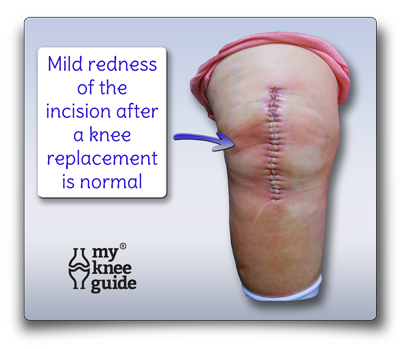
The Wound Important Considerations To Understand
An infection of a knee replacement is one of the worst complications we worry about.

Infection after knee replacement. No surgical procedure is without risks however. The infection of the artificial joint is one of the dreaded complications of joint replacement. Thats because it is very difficult to treat a knee after it is infected.
In the first 2 years after surgery the chance of developing an infection is estimated at 15. There are many studies that examine the risks of PJIs with dental work. Treatment often requires a combination of one or more major operations and antibiotic therapy.
The risk of infection after joint replacement surgery is roughly about 1 1 in 100. Because doctors want to avoid infections youll probably be advised to avoid dental work immediately after your TKR. Gram positive coccusand Staphylococcus coagulase-negativeand Staphylococcus aureusare the most common isolated germs 50 of the cases.
If you develop an infection in and around your knee after knee replacement it can be one of the worst complications to occur. The authors start out by classifying knee infections that occur after the primary first total knee replacement as one of four types. Multiple surgical procedures and long term antibiotics are needed to attempt to rid your body of an infection once your knee replacement is infected.
Doctors call these superficial minor or early-onset infections. In less than 1 percent of joint replacement surgeries an infection. It is associated with increased morbidity and mortality increasing the final costs.
Both partial and complete revision total knee arthroplasty increased the risk of infection as compared with the risk following primary knee replacement. 1 infection present at the time of the primary total knee arthroplasty 2 infection develops within the first 30-days after surgery 3 infection goes into the blood but symptoms only last four-weeks and 4 a chronic infection lasting more than 30-days. This study aimed to understand and characterise patients experiences of periprosthetic knee infection.
A knee replacement infection may develop in the wound after surgery. The Initial Stage Staged Surgery. Washout of the soft tissues and the area surrounding joint.
But like all surgeries there is are risks of a number of complications after any hip or knee joint replacement surgery. Around 1 of patients who have had knee replacement develop deep infection around the prosthesis. Joint replacement infections can even occur years after your.
It may also occur around the artificial implant that is. A small percentage of patients undergoing hip or knee replacement roughly about 1 in 100 may develop an infection after the operation. But how is a new knee connected to your teeth.
After knee replacement surgery an infection can develop in the skin around the incision. Infection after total knee replacement IATJ is a rare complication. This includes joint replacements the infection of which are called prosthetic joint infections PJIs.
One of the most concerning complications associated with a knee replacement is an infection. Infection after knee replacement surgery is rare. After 2 years the chance of infection.
A knee replacement infection may occur at any time after surgery. Three hundred and eighty-seven reoperations were performed because of infection. Joint replacement infections may occur in the wound or deep around the artificial implants.
One of the risk factors for developing an infection after a dental procedure is having artificial hardware in ones body. Knee infection after surgery Knee replacement surgery is a common surgery that doesnt present complications for most people. They also said that it could have taken months after the germsbacteria attached themselves to the metal parts of the replacement for it to grow and spread to the tissue muscletendon ect within the knee thats when the infection spreads and your body reacts.
An infection may develop during your hospital stay or after you go home. Late infections or those that show up months to even years after a hip or knee joint replacement surgery and those infections that have been present for longer periods of time will generally require a staged surgery.
Ad Search Faster Better Smarter Here. Often after any type of knee surgery excess swelling occurs to protect the knee but then scar tissue and eventually fibrosis can set in as rest increases.
/risks-of-knee-arthroscopy-4177344_color2-5c1afbe6c9e77c0001300bca.png)
Risks And Complications Of Knee Arthroscopy Surgery
Swelling and scar tissue after knee replacement are the two biggest challenges you will face.

Knee replacement scar tissue. The primary concern with a manipulation is the risk of bone breakage. Once that balloon gets too tight you have a significant limit in how much you can move your knee. Scar tissue after knee surgery or an injury is essentially the bodys version of a Band-Aid.
Over time scar tissue builds up inside the knee causing the knee joint to shrink and tighten. What happens to scar tissue after knee manipulation. How I Massaged My Knee During Physical Therapy After warming up on the stationary bike my offsite therapist massaged my knee with Free-Up massage cream for 10 minutes before I did any of the more demanding exercises.
Depending on the site of scarring the age of the patient or their previous range of motion Arthrofibrosis occurs in approximately 10 of total knee replacement surgery. How long does stiffness last after total knee replacement. By inserting a scope in the joint scar tissue is removed thus improving knee movement.
Ad Search Faster Better Smarter Here. The Cause of Knee Arthrofibrosis. For example a person may develop scar tissue internally after undergoing knee replacement surgery.
In this video we can discuss what scar tissue actually is and how you. I also had aggressive scar tissue immediately after my knee replacement. Knee replacement also called arthroplasty is a surgical procedure performed to resurface the knee joint in order to alleviate knee pain and disability.
After trauma or knee surgery scar tissue can form in your joint. It can also occur after surgery on the knee such as a knee replacement. There are several additional physical therapy interventions to help manage scar tissue after knee surgery.
Also known as fascia or connective tissue scar tissue sticks around after an injury because it helps protect the injured area. The condition sometimes occurs in a knee joint that has recently been injured. So the more swelling thats in that knee the tighter the balloon gets.
Massaging the scar helps to decrease scar tissue build up and may help to make your scar less noticeable. Arthrofibrosis is also known as stiff knee syndrome. Physical therapy modalities such as ultrasound electrical stimulation and low-level laser therapy are all used in conjunction with manual therapy to help flatten scar tissue after injury 3.
Arthroscopy - For total knee joint replacements patients with extreme cases of scarring your doctor may recommend an arthroscopic surgery. According to Johns Hopkins Medicine the most common condition that results in the need for knee replacement surgery is osteoarthritis. Knee manipulation is a procedure to treat knee stiffness and decreased range of motion.
Treatment for scar tissue in knee Arthrofibrosis refers to a condition where excessive scar tissues growing during surgery wound healing starts to ply with the surrounding joints and soft tissues filling up spaces in between and therefore causes movement limitation and pain. It can also occur after surgery on the knee such as a knee replacement. This procedure is most beneficial in the six to 12 weeks after surgery.
A manipulation is a procedure where no incisions are made. Ultimately I had to have two post-surgery knee manipulations where they put me back under and broke the scar tissue up by bending my knee. I had my right knee replaced in 2006.
It might form after procedures such as anterior cruciate ligament ACL surgery or total knee replacement. This is an experience very close to my own. The scar tissue does not allow you to fully bend or straighten your leg.
Scar tissue is different from normal skin. The condition sometimes occurs in a knee joint that has recently been injured. Knee manipulation breaks up the scar tissue that has formed.
Knee scar tissue develops as a result of traumatic injury to the knee or as a complication of knee surgery. Like other types of scar tissue scar tissue in the knee is a bundling of collagen fibers that develops during wound repair. The patient is given anesthesia usually through an IV and while sleeping your surgeon forcibly moves the knee to break up scar tissue.
The tissue can be very sensitive to pain. Scar tissue after a total knee replacement can limit range of motion and increase pain. The statistic increases as patient s.